

Retired from a 40-year career in the public service, beginning in 1981, Dr Ushewokunze-Obatolu is a pathfinder woman veterinarian. A Zimbabwean, she is the holder of a first university degree in Veterinary Medicine, a master’s in Veterinary Public Health, a masters in Veterinary Epidemiology, and a doctorate in Veterinary Medicine. She is a recipient of the 2019 Women in Agriculture award for “Outstanding Contribution to Zimbabwean Agriculture”.
Her career experience covers technical, regulatory, governance, and workforce development aspects of the national veterinary system as well as its regional and global interfaces.
Dr Ushewokunze-Obatolu contributed to knowledge creation in animal health evidenced through refereed original publications, conference papers and public awareness materials. As part of a generation which experienced the older empirical and manual techniques as they were transformed by electronic, digital data and molecular mechanisms, she was instrumental in the introduction of transformational initiatives. These touched on precision techniques, process automation, predictive intelligence-building applications with a bearing on efficiency building in service provision, knowledge discovery, and secure transfer in the context of local socio-economic ecosystems. She also contributed immensely to Animal health and production policy and strategy development and implementation.
Outside the animal health sphere, some of her outputs relevant to the educational system include:
Her personal experience, as a woman pathfinder led her to explore gender aspects of women’s participation in the sciences. Between 2004 and 2013, she was co-opted as a board member of the International Network of Women in Engineering and Sciences (INWES), formed in 2003 with a vision of a better world through full and effective participation of women and girls in all aspects of STEM. This would be achieved through influencing policies in STEM worldwide by encouraging education, retention, support and advancement of professional women and students through international networking.
Dr Ushewokunze-Obatolu has at various periods served on statutory Boards of local public entities namely Tobacco Research Board, Cold Storage Company, the SIRDC, Pig Industry Board and the Agricultural Research Council of Zimbabwe. She is a founding member of the Zimbabwe Academy of Sciences, the Biotechnology Trust of Zimbabwe and presently chairs the Board of Champion Farmer Seeds Company.
Presently, she is an expert certified and enlisted by the animal health standards-setting body, the World Organisation for Animal Health (WOAH), for services in the evaluation of the performance of member country veterinary services. She has served a term as a developing country advisor on capacity building on the gender-responsive Standards and Trade Development Facility of the World Trade Organisation. Further, she currently sits on the Board of Trustees of GALVmed (and its Technical and Scientific Committee), an international NGO for the promotion of adoption of veterinary medicinal products by smallholder livestock producers in developing countries.
Dr Unesu Ushewokunze-Obatolu is the Chairman of the Board of Trustees of the Women’s University in Africa beginning mid-2024.

Executive Director, Faculty of Agriculture, Environment and Natural Resources.
Dr T Muziri holds a PhD in Horticultural Sciences from Stellenbosch University, an MSc in Crop Production from Africa University and a BSc in Crop Science from the University of Zimbabwe. Dr Muziri has university experience spanning 23 years. Prior to joining Women’s University in Africa, Dr Muziri lectured for 15 years at the Midlands State University, where he served in the following positions: Chairperson of Department (5 years), Deputy Dean (4 years) and Acting Executive Dean (1.5 years). He was also appointed Postdoctoral Fellow in the Department of Horticulture at Stellenbosch University in 2016, and Visiting Scholar at Catholic University of Leuven, Belgium, in 2013 & 2014. He served as a Sabbatical Fellow at Livingstonia University in 2024, where he taught diploma and degree students.
Dr Muziri has received and managed many grants for research and community development. He was part of concept note and proposal development for three (3) multisectoral development project proposals, one of which culminated in the Sizimele Action for Resilience Building, funded under the Zimbabwe Resilience Building Fund (ZRBF) and the United Nations Development Programme (UNDP). He was Co-Principal Investigator in the Beneficiation and Commercialization of Indigenous Fruit and Herbs Project funded by the Ministry of Higher and Tertiary Education, Innovation, Science and Technology Development. Dr Muziri was the lead in the proposal development for the Holy Cross Irrigation project in Chirumanzu and led its implementation for the first 11 months. Dr Muziri is also the 2024 recipient of the Seeding Labs equipment (Boston, USA).
Dr Muziri has extensive international experience and exposure in higher education. He has presented academic papers in India, Belgium, South Africa, Malawi, Burkina Faso, Cameroon, and Botswana. He has also conducted academic visits to the India Institute for Horticulture Technology, the Proefcentrum Fruitteelt Research Center in Snt Truiden (Belgium), the Departments of Horticulture at Universities of South Africa, University of Swaziland and the Greenhouse Technologies in Botswana, where he was a consultant in mushroom production and hydroponics. Dr Muziri coordinated the introduction of Quinoa to Zimbabwe, managing the process of post entry quarantine and roll out to farmers. Dr Muziri’s current research interests are in the area of fruit science, postharvest biology, export horticulture and value addition.
Publications
Muziri, T, Theron, K.I., Cantre, D., Zi Wang, Verboven, P., Nicolai, B.M and Crouch, E.M. 2016. Microstructure analysis and detection of mealiness in ‘Forelle’ by means of X-ray computed tomography. Postharvest Biology and Technology, 120: 145-156.
Muziri T., Karen Theron., Nieuwoudt, H. H., L. Schoeman., E. M Crouch. 2018. Mealiness in ‘Forelle’ pear: relationship with TSS and its prediction based on FT-NIR spectroscopy. Acta Hortic, DOI. 10.17660/ActaHortic.2018.1201.46. p 339-346
Mangezi S, Manjeru P, Makuvaro V, Chaibva P, Mutetwa M and Muziri T (2026) Cattle manure amended soil influences germination and early seedling development of marula (Sclerocarya birrea (A. Rich) Hochst.). Front. Food Sci. Technol. 5:1734009. doi: 10.3389/frfst.2025.1734009.
Mlambo, N., Chifamba, M., Mhlahlayazi, T., Mwabvu, B., Chaginda, I., Madanzi, T., Takawira, M., Muziri, T. 2026. Influence of fruit maturity and slimy seed coat on seed traits and germination of horned melon (Cucumis metuliferus E. Mey. Ex Schrad.). Sci Rep (2026). https://doi.org/10.1038/s41598-026-40932-6 (In press).
Moses Mutetwa, Pepukai Manjeru, Tendai Madanzi, Tavagwisa Muziri. 2025. Commercial Assessment of Horned Melon (Cucumis metuliferus) Cultivation in Local Economic Development and Social Well-being in Rural Livelihood of Zimbabwe. Agricultural Reviews. DOI:10.18805/ag.RF-400.
Mutetwa, M., Manjeru, P., Chaibva, P., Makaure, B., Chandiposha, M., Madanzi, T., Makuvaro, V., Muziri, T. (2025). Optimizing nitrogen fertilizer levels for improved growth, yield, and fruit quality in horned melon (Cucumis metuliferus E. Mey. ex Naudin). EUREKA: Life Sciences, 2, 3–13. https://doi.org/10.21303/2504-5695.2025.003878.
Tavagwisa Muziri, Pahla Innocent, Fanuel Tagwira. 2026. Effects of Municipal Phosphocompost on Groundnut Growth, Yield and Residual Soil Phosphorous. Agriculture, Forestry and Fisheries. (Accepted October 2024).
Paul Chaibva., Cecil Mugala, Veronica Makuvaro, Tavagwisa Muziri, Ignatious Chagonda, Blessing Mirika Ndau. 2023. Adaptability analysis of quinoa cultivation: A case study of Zimbabwe. Geographical Information Bulletin, Vol 2, pp 144 – 157. DOI: https://doi.org/10.50908/grb.2.0_144.
Moses Mutetwa., Ignatious Chagonda, Tadzwa Gwaziwa, Pamela Mangezi, Tapfumaneyi Midzi, Lawrence Sithole, Taurira Mtaita, Johnson Masaka and Tavagwisa Muziri. 2022. Effect of Trichoderma- Based Biofertilisers on the Flower and Fruit Pattern of Horned Melon (Cucumis metuliferus E. Mey. Ex. Naudin. International Journal of Agronomy. Volume 2022, Article ID 6866853.
Dube, O., Mudada, N., Gama T., Muziri T. 2022. A survey of Insect Pests Attacking Quinoa (Chenopodium quinoa) and their Natural Enemies in Zimbabwe. Journal of Plant Sciences. Vol 10, No 3, pp 91 – 95.
Tavagwisa Muziri., Paul Chaibva., Chofamba Anyway., Madanzi Tendai., Manjeru Pepukai., Mudada Nhamo., Manhokwe Sherpard., Mugari Amiel., Diego Matsvange., Murewi Cyril Tapiwa Farai., Liboster Mwadzingeni, Raymond Mugandani. 2020. Using principal component analysis to explore consumers’ perception toward quinoa health and nutritional claims in Gweru, Zimbabwe. Food Sci. Nutr. 2020. 00: 1-9. https://doi.org/10.1002/fsn3.2071.
John Nyoni., Tendai Madanzi., Joanah Midzi., Tavagwisa Muziri., Kapenzi Arnold. 2020. Response of Sweet Wormwood ( Artemisia annua L.) to Different Rates of Inorganic Nitrogen Fertilizer in Semi-Arid Zimbabwe. American Journal of Plant Sciences 11(04):529-537.
Ncumalo, KA, Masarirambi, MT., Mabuza, M., Muziri T., Masirirambi, T. 2017. Common physiological disorders of white / Irish Potato (Solanum tuberosum) tubers produced in Swaziland: A review. J. Agron. Agri Sci 1: 001.
Pahla, I., Tagwira, F., Muziri, T. and Chitamba, J. 2014.. Effects of pH, nitrogen and phosphorus on the establishment and growth of Moringa oleifera. International Journal of Agriculture and Forestry 2014, 4(3): 211-216.
Pahla, I., Muziri, T., Chinyise, T., Muzemu, S. and Chitamba, J. 2014. Effects of soil type and different pre-sowing treatments on seed germination and seedling vigour of Acacia sieberana. International Journal of Plant Research, 4 (2): 51-55.
Innocent Pahla, Martin Moyo, Simbarashe Muzemu, Tavagwisa Muziri. 2014. Evaluating the effectiveness of botanical sprays in controlling aphids (Brevicoryne brassicae) on rape (Brassica napus L.), International Journal of Agronomy and Agricultural Research, 5(1): 1-6.
Muziri, T., Theron, K. I and E. M. Crouch. 2013. ‘Forelle’ pear mealiness development as influenced by cell size. Acta Hortic. 1094: 515-523.
Pahla1, I., Muziri, T., Muzemu, S. and Chiedza, C. 2013. Effect of different sucrose concentrations on the vase life of different protea cultivars (Protea leucadendron and leucospermum). International Journal of Biosciences. 3(9): 208-213.
Mudzingwa, S. K., Muziri, T. 2013. Evaluation of selected crude aqueous botanical extracts against sap-sucking pests in vegetable production. Proceedings of the First International Conference on Pesticidal Plants, Vol 1. ISBN: 978-9966-033-00-0.
Madanzi, T., Chiduza, C., Richardson Kageler, S. J and T. Muziri. 2012. Effects of different plant populations on yield of different soyabean (Glycine max (L.) Merrill) Varieties in a smallholder sector of Zimbabwe. Journal of Agronomy, 11 (1): 9 -16.
Madhara Temba Mabarani, James Chitamba and Tavagwisa Muziri. 2012. Fresh leaf yield and flowering responses of Brassica juncea varieties to varying nitrogen levels. International Journal of Agronomy and Agricultural Research (IJAAR) ISSN: 2223-7054.
Muziri, T. 2009. Farm management challenges for a country in transition: A case of Zimbabwe. Journal of International Farm Management Vol 4(4). ISSN 18162495.
Published Book Chapters
Parwada, C., Gumbo, A., Muziri, T. (2026). Exploring the Potential of Marginalised Small Grains for Achieving Food Security Under Climate Change. In: Ndhlovu, E. (eds) Agriculture and Sustainable Development in Sub-Saharan Africa: Resilience and Recovery Toward Sustainable Futures. Sustainable Development Goals Series. Springer, Cham. https://doi.org/10.1007/978-3-032-09881-8_19.
Stanlake Mangezi, Pepukai Manjeru, Raymond Mugandani, Veronica Makuvaro, Paul Chaibva, Moses Mutetwa, Bester Tawona Mudereri, and Tavagwisa Muziri. 2026. Diversity of Indigenous Fruit Trees and Their Role in Supporting Resilient Livelihoods in Marginal Areas of Zimbabwe: Case of Chirumanzu, Chivi, and Mberengwa Districts. In: Leal Filho, W., Matandirotya, N., Yayeh Ayal, D., Luetz, J.M., Borsari, B. (eds) Climate Change, Food Security, and Land Management. Springer, Cham. https://doi.org/10.1007/978-3-031-71164-0_40-1.

Dr Priscilla Mataure is a Senior Lecturer and Chairperson of the Department of Family and Health Sciences at the Women’s University in Africa. She holds a PhD in Health Sciences, a Masters Degree in Health Systems Management from the London School of Hygiene and Tropical Medicine and has over 20 years of experience in Clinical and Public Health Research and Programming; Sexual and Reproductive Health and Rights; Programme Planning, Design and Management; Strategic Plan Development; Monitoring, Evaluation and Appraisal of Community Based and Institutional Programmes; Development of Training Materials and Implementation Guidelines, Gender Mainstreaming into Programmes, Policy development and Health Systems Strengthening.
Dr Mataure has provided consultancy services for various international and local organisations in the southern Africa region. She has skills in both Qualitative and Quantitative Research, Dr Mataure was trained as an International Scholar in Research at the Centre of AIDS Prevention Studies at the University of California in San Francisco in 2000-2002. She currently lectures in Research Methods among other courses and is currently a Peer Reviewer of two (2) International Journals of Health Sciences and is in the editorial board of one (1) journal, as well as an External Examiner in the Health Sciences at UNISA.

Dr Itai Hlonie Mafa is a self-motivated and critical social worker who is enthusiastic about academia, gender issues, social policing, social justice and sexual and reproductive health rights. She has a proven record in social research and has been consulted for research projects in Zimbabwe and South Africa. Dr Mafa is involved in various research committees in the faculty which has sharpened her research skills. She has also accumulated more than ten years of extensive experience in tertiary institutions as a lecturer for various Social Work courses and carrying out post-graduate research supervision. Dr Itai Hlonie Mafa has a well-developed teaching philosophy and a flexible attitude to work, with excellent communication and written skills. Dr Mafa has participated in curricula development and curricula review in Zimbabwe and South Africa, contributing to quality assurance. She is the current NASW-Z treasurer, a thought leader for ZIMCHE and was also involved in consolidating MBKs.
Published articles
Mukurazhizha, R and Mafa, I. (2022). Flaws in preparing children with disabilities for life after Institutional Care in Zimbabwe: Implications for Social Work Practice. Journal of Social Development in Africa, 37
Chisango, T., Mafa I., & Maunganidze, L. (2022). Investigating the sexist implications of Bride Price (Lobola) in Zimbabwe. Society doi:10.1007/s12115-022-00743-7
Chigangaidze, R., Mafa, I., Simango, T and Mudewe, E. (2022). Establishing the relevance of the Ubuntu philosophy in Social work Practice: Inspired by the Ubuntu World Social Work Month 2021 Celebration and the IFSW (2014) global definition of Social work. International Social work:Doi:10.1177/00208728221078374
Chatukuta, A and Mafa, I. (2022). The significance of the clinical social workers’ dress in the helping process: The clients’ perceptions. Practice: Doi:10.1080/09503153.2022.2035706
Simango, T.G and Mafa, I. (2022). Child Disciplinary Practices versus Child Rights in Zimbabwe: Viewed through Social Work Lenses Qualitative Sociological Review 18 (1) 114-131 DOI: https://doi.org/10.18778/1733-8077.18.1.06
Charamba, S., Mafa, I and Chikadzi, V. (2021). ‘In the eye of the storm’: An exploration of the psychosocial experiences of teen mothers in Zimbabwe. Indian Journal of Social Work (82) 12
Mafa, I., Simango, T. and Chisango, T. (2021). Under-Reportage of ‘Sex-For-Marks’ Cases within Public Universities in Zimbabwe. Sexuality, Gender and Policy Doi:10.1002/SGP2.12038
Mafa, I and Simango, T.G. (2021). Exploring the ‘Thigh-For-Marks’ Phenomenon among Public Universities in Zimbabwe. Journal of Human Rights and Social Work https:/doi.org/10.1007/s41134-021-00188-8
Chisango, T., Muridzo, N., Mafa, I and Khombo, S. (2021). An exploration of the stereotype content model to university lectures. Journal of Applied Social Sciences https:/doi.org/10.1177/19367244211026915
Mafa, I. (2021). Pertinent ills concomitant with matrifocality in Zimbabwe: Implications for development. Innovare Journal of Social Sciences, 9 (2):10-15
Muridzo, N, Chikadzi, V., Mahunste S and Mafa, I. (2021). Legal shortcomings in the VFS forums responding to child sexual abuse: Lessons from a Zimbabwean case study. African Journal of Social Work 11(1): 32-39
Mafa, I., Kange’the S. and Chikadzi, V. (2020). ‘Revenge Pornography’ and Women Issues: Implications for Social Work Practice and Women’s Rights. Journal of Human Rights and Social Work, 5 (1) : 118-128 https://doi:10.1007/s41134-020-00118-0
Mahuntshe, L., Muridzo, N., Chikadzi, V and Mafa, I. (2020). Responding to the COVID-19 pandemic in Zimbabwe: Lessons from 2018 Cholera outbreak. Journal of Social Development in Africa, 35 (Special Issue): 91-106
Mafa, I and Kange’the, S. (2019).Women-NGOs and Financial Viability: Implications for Women Empowerment Processes from a Social Work Perspective. African Journal of Social Work, 9(2):43-51
Muridzo, N., Chikadzi, V., Mafa, I and Chinyenze, P. (2018). Parental Circumstances leading to Child Sexual Abuse in Zimbabwe. Journal of Social Development in Africa, 33(2):135-168
Mafa, I and Kange’the S.M. (2016). Exploring the Underpinnings of Pseudo-Prostitution in Institutions of Higher Learning in selected African countries. Journal of Sociology and Anthropology, 7(3):167-174
Mafa, I & Kange’the S.M. (2016). A critical Analysis of the prostitution phenomenon, drawing examples from selected African countries: A Literature Review. Journal of Sociology and Anthropology, 7(4):279-288
Kange’the S.M and Mafa I. (2014). Evaluating the survival strategies adopted by single mothers to enhance their livelihood in Zimbabwe. Mediterranean Journal, 5 (2): 1222-1229
Kange’the S.M and Mafa I. (2014). Dynamics associated with the state of cohabitation in developing countries. A literature Review. Mediterranean Journal, 5(4):601-609
Kange’the S.M and Mafa I. (2014). Assessing Post-Apartheid Poverty in South Africa. A literature Review. Mediterranean Journal, 5(1):449-456
Kange’the S.M and Mafa I. (2014). Dynamics associated with matrifocality in Zimbabwe. Journal of Sociology and Anthropology, 5(2):131-139
Published Book Chapter (s)
Mudewe, E., Simango, T., Mafa, I and Chingangaidze, R. (2022). Demystifying the National Case Management System in Child protection. In Professional Social Work in Zimbabwe: Putting Children First. Beyond the Vale Publishing: Edenvale, South Africa
Published Book (s)
Mafa, I. (2020). Identity and Identity Crisis: A Practical Guide to Finding Your True Self. Kindle Direct Publishing

Precious Hove is the dean for faculty of Management and Entrepreneurial Sciences at Women University in Africa, Zimbabwe. Precious Hove holds a Doctorate degree in Business Management obtained from Witwatersrand, South Africa, a Master’s degree in Strategic Management, obtained from Chinhoyi University of Technology, an Honors degree in Business Management obtained at Midlands State University and a Diploma in Education, obtained from the University of Zimbabwe. Precious possess leadership skills and promotes team spirit at work. She is a an honest person with confidence in her work. Precious is a woman of integrity. Over the years, Precious has developed interest in business management, new product developments, entrepreneurship and knowledge management. She has co-authored several publications in those areas. Precious has over 15 years’ experience at Universities.

Dr Fay Chung is co- founder and Chairperson Board of Trustees for Women’s University in Africa. A former Minister of Education Sports and Culture Dr Chung has been involved in a number of non-governmental organizations in Zimbabwe. An accomplished educationist and driver of women education, Dr Fay Chung has worked in the education system in a number of capacities. Dr Chung is a founder member of the Forum for African Women Educationalist and Association for Strengthening Higher Education for Women in Africa Dr Chung has been instrumental in the education of women in Africa. Dr Chung has worked in a number of international organizations which include UNESCO, UNICEF, OAU and AU. Dr Chung has several publications to her name which include the popular Re-Living the Second Chimurenga: Memories form Zimbabwe’s Liberation Struggle and The Nordic Africa Institute amongst others.
She was educated at the University of Zimbabwe, where she received her first degree (1962), her postgraduate Certificate in Education (1965) and her Doctorate (1999).
She also studied at Leeds University, where she obtained her M. Phil. In English Literature (1971) and has undertaken research at St Antony’s College, Oxford (1995). She diversified into economics and completed a distance-education degree at the School of Oriental and African Studies, London in 2002. Following retirement she enrolled in an honours degree program in Economic at the University of Zimbabwe.
Dr Chung’s career has been almost exclusively in education. As an undergraduate she was involved in organising students to teach house servants and workers in the vicinity of the campus. One of the tasks was to eradicate illiteracy. She has always had a vision to provide leadership in Africa through access to relevant quality tertiary education.
From 1963 to 1968 Dr Chung taught at high schools levels at Ascot and Harare High Schools in Zimbabwe. While studying for her M. Phil. Degree at Leeds University, she taught as a part-time lecturer at Leeds Polytechnic and at the Kitson College of Engineering from October 1968 to June 1970. She was a lecturer in the School of Education at the University of Zambia from 1971 to 1975. From 1975 to 1980 she worked fulltime for the Zimbabwe African National Union (ZANU), in charge of teacher education and curriculum development for Zimbabwean refugees schools in Mozambique.
After Zimbabwe’s independence in 1980, Dr Chung worked in various capacities in the Ministry of Education, including as the first acting director for the Zimbabwe Integrated National Teacher Education Course (ZINTEC), which was initiated at independence to train 9,000 primary teachers through a combination of face-to-face teaching and distance education; as head of educational planning in the ministry, with responsibility for planning the expansion for the primary, secondary and teacher training programs; as head of the curriculum development unit, tasked with transforming the curricula for primary and secondary schools; as deputy secretary in charge of school administration; and finally as minister of Education and Culture. She spent a total of 14 years in the government of Zimbabwe.
Dr Chung has been involved in a number of non-governmental organisations. She took part in the formation of the Zimbabwe Foundation for Education with Production (ZIMFEP), set up to provide education for war veterans and returning refugee children from Mozambique and Zambia. School leavers were assisted through placement in further training and in jobs, or through the establishment of cooperatives.
She has been a board member of the Zimbabwe Institute of Development Studies (ZIDS). She is a founder member of the Forum for African Women Educationalists (FAEW), a network of education ministers, women university vice-chancellors and other women educational leaders in Africa, focused on strengthening the education of girls and women in Africa. Dr Chung is the founder member of the Association for Strengthening Higher Education for Women in Africa (ASHEWA).
Dr Chung’s work has an international dimension. She was a member of the Delors Commission Education and worked as the chief of the education cluster at UNICEF, New York (1993-98), then as the first director of the UNESCO International Institute for Capacity Building in Africa (IICBA) in Addis Ababa (1998-2003). Between 1998 and 2003 she served as an honorary special advisor to the Organisation of African Union (OAU) and later to the African Union (AU).
Dr Chung is a member of the Zimbabwe National Education Advisory Board as of 18 March 2009.
Publications
Chung Fay, ‘Re-Living the Second Chimurenga: Memories from Zimbabwe’s Liberation Struggle,’ The Nordic Africa Institute, Weaver Press 2006

She is the Founder and Founding Vice Chancellor of the Women’s University in Africa. She holds a PhD in Public administration with the University of Zimbabwe where her research was on “Critical Organisational problems of administering and Managing Social Development in a newly-independent Public Service”: the case of Zimbabwe. She also holds a Masters degree in Public Administration with the University of Missouri, Columbia and BSc Public Administration with the same university. She holds a Primary Teachers Diploma with Waddilove Teachers’ College, Marondera in Zimbabwe.
Professor Sadza’s employment record backdates to 1964 as school teacher. Post Independence she became registrar of Apprenticeship Authority in the Ministry of Manpower Planning and Development in Zimbabwe. She is one of the founding Directors of the Zimbabwe Institute of Public Administration & Management (ZIPAM).In 1987 to 1989 she was Commissioner of the Public Service Review Commission, Government of Zimbabwe. In 1988 to 1990 she was Zimbabwe Parastatals Commissioner. In 1990 to 2000 she was Public Service Commissioner in Zimbabwe.
Professor Sadza has done a lot of publications with emphasis on gender issues.
She has presented papers at national and international fora among which were:
Professor Sadza is a member of various Boards among them:
CURRENT
COMMITTEES/TRUSTS
She is also into consultancy mostly in the education field.
She has won several awards in recognition of her outstanding works of empowering women through education.
Awards:
Professor Sadza is married and has two children.

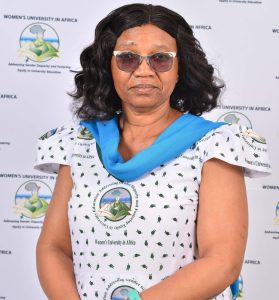
Mrs Gono holds a Postgraduate Certificate in Professional Practice in Change Leadership with the University of the West England (UWE), 2022, and a Master of Business Administration degree with Africa University (AU), 1999, Mutare, Zimbabwe, and a Higher National Diploma in Business Administration with Masvingo Technical College, 1995.
Mrs Gono is the Director for International Programme and Global Initiatives since December 2023, a portfolio for internationalizing the university in terms of curriculum, teaching, research, student and staff exchange programmes, and partnerships, with a bid to produce a global graduate. She has increased partnerships with international universities and organisations. She has made inroads in physical penetration of the university in countries like Malawi. Mrs Gono is also the Designate Officer for the Association of African Universities Southern Africa Regional Office (AAU SARO), currently hosted by the Women’s University in /Africa since September 2023. The Association of African Universities (AAU), is the voice of higher education in Africa and the implementing agent of the African Union on higher education issues. The AAU has established regional offices to widen its reach and enhance its impact across Africa. Mrs Gono has spearheaded the establishment of the governance structures for the AAU SARO Office to be all-inclusive in tackling regional higher education issues. She provides secretariat services to the AAU SARO Board.
Mrs Gono was the Director for Marketing, Communications & Public Relations of the University since June 2017 to November 2023. She was the custodian of the WUA Brand. Her roles included media liaison, marketing, events management and coordination, exhibitions, publications and digital marketing. She also coordinated Alumni activities and Community Engagement. The tasks which enhanced the university brand by increasing visibility and awareness. In this role, she played a critical part in information dissemination and business continuity during the COVID-19 pandemic.
From May 2012 to May 2017, Mrs Gono was the University’s Director for Resource Mobilisation and Marketing. She was responsible for growing the University’s partners and enrolment. She was also brand custodian and media liaison.
From November 2008 to May 2012. Mrs Gono was the Registrar/Director of Strategic Business Development for the Women’s University in Africa, Zimbabwe. She was responsible for Marketing & Public Relations, IT, HR & Administration, Strategic Business Units, which were channels for revenue diversification, Resource Mobilisation, and Registry that incorporated student records, examinations, admissions, and registration.
She worked at the Zimbabwe Broadcasting Corporation as Head Finance and Administration from December 2002, re-graded to Group Finance Director in December 2003 and re-graded to General Manager Finance and Corporate Affairs from December 2006 to June 2008. Before joining ZBC, she was Chief Accountant in the Office of the President and Cabinet, where she rose through civil service ranks to Under Secretary for Finance. She has 19 years of experience in government financial management and six years of experience in the parastatals as well as 15 years in academia.
Mrs Gono has served in several Boards that include the Medicines Control Authority of Zimbabwe (MCAZ) 2003 to February 2011, the Well – Patsime NGO an organization which is integrating HIV/AIDs with permaculture targeting the infected and affected, the Parastatals Council of Zimbabwe from 2004 to 2008, Trustee of the Women in Agri-business in sub-Sahara Africa Alliance (WASAA) since 2012, a non-profit making institution to promote women in agri-business, the Institute of Child Resources in Zimbabwe (ICRZ) from 2008 to 2016.
In January 2012, Mrs Gono was appointed a member of the International Association of Universities (IAU) Reference Group on Higher Education focusing on Education for All (EFA) and Achievement of the Millennium Development Goals (MDGs) by 2015 for the period 2012 to 2015 as an Advisor, information sharing and recognition of EFA-related activities undertaken by institutions of higher learning. She contributed to the development and establishment of the Early Childhood Development Model Centers in the University to cater for female students and surrounding communities, as well as a practical lab for Education degree programmes.
Mrs Gono is currently serving on the World Technology Partners Board; www.worldtechnologypartners.org
She has been nominated for various business accolades and awarded the Megafest 2014 Top 20 Outstanding Women in Business.
She was the designated Officer for Zimbabwe Broadcasting Holdings in the African Broadcast Media Partnership (ABMP) Against HIV/AIDs. She managed to coordinate the National selections for the Imagine Afrika reality show for 2007, where the Zimbabwean candidate was in the winning group, which scooped US$6000 each. The 2008 reality show, on the same programme, managed to have three Zimbabweans in the top 30 of Africa select. This programme profiled young African achievers, matching their ingenuity and leadership in tackling challenges confronting many poor communities across Africa, such as HIV/AIDs, water & sanitation, training and food supply. The show focused on themes including gender equality and equity, open communication about gender roles, HIV/AIDs, stigma and HIV testing. The campaign emphasised personal action and urged all Africans to consider their role in realizing an HIV free generation under the tag line ‘Imagine the possibility of an HIV-free generation: It begins with You.’
In her portfolio of community engagement at the Women’s University in Africa, she succeeded in bringing key research collaborations with the University College London (UCL) on a project titled: Mapping risk and resilience to mental health consequences of child marriage in Zimbabwe. She also brought in the University of the West of England (UWE) collaboration in the delivery of the module titled Professional Practice in Change Leadership at postgraduate level.
Mrs Gono has coordinated a lot of events that have impacted positively in the women empowerment agenda. These included public lecture series that focused on issues affecting women and children, covering issues of gender-based violence, child marriages, human trafficking, and African Union agenda 2063 among others.
Mrs Gono was a volunteer at the 18th ICASA (International Conference on AIDS and STIs in Africa, Zimbabwe 2015).
On 27 April 2017, Mrs Gono successfully hosted the First Lady of the Republic of Namibia, Her Excellency, Madame Monica Geingos to hold a #Be Free Conversations with young people, professionals, service providers, Life Skill teachers/lecturers and community leaders. Madam Geingos was appointed to be the United Nations AIDS as a special Advocate for Young Women and Adolescent Girls in September 2016. Her role is specifically to champion the Start Free, Stay Free, AIDS Free agenda through the #BeFree Campaign which is a framework targeting the ending not only AIDS among children, adolescents and young women by 2020 but violence against children and enhancing communication between parents/guardians and youths.

ORCID: https://orcid.org/0000-0002-0845-0677
Memberships
The Southern Africa Institute for Management Scientists: TAKS01
Association of Information Systems: 49644040
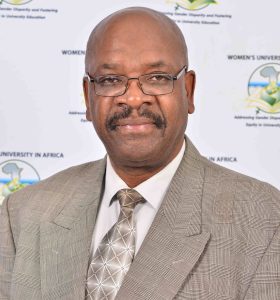
I (Prof. Sam Takavarasha Jr) am the Director, Research Innovation Postgraduate Centre at Women’s University of Africa. Prior to that served as the Dean of the Faculty of Management and Entrepreneurial Sciences at Women’s University of Africa. I also worked as a senior lecturer department of Information Systems after my research fellowship at the University of Fort Hare, South Africa, in the Department of Information Systems. I acquired my PhD in Information Systems at University of Zimbabwe where I led 3 research consultancy projects and championed Zimbabwe’s first e-learning virtual lecture project. I have also published many peer reviewed academic papers and published a book with IGI-Global. I have conducted three national consultancy projects, two of which I was the principal investigator.
My academic administrative experience includes sitting on two university councils on both the management and oversight sides as well as serving as a member of EXCO. I also seat on the board of one not for profit trust as a volunteer. My editorial experience includes being special issue journal editor (International Journal of Information Systems (IJISPM) and Electronic Journal of Information Systems in Developing Countries (EJISDC), Editor in Chief of POTRAZ Journal, editing a book project, being track chair European Conference of Information Systems (ECIS) 2017 /2018, co-conference chair of ACICST 2023/2024, conference chair of ZCICT as well as program committee member of International Conferences including IFIP HCC13, ICTAS2018, IFIP HCC14, ZCICT, ACIST and technical chair of Cybersecurity 4 D 2024.
Qualifications: PhD Information Systems (ICT4D) University of Zimbabwe (2016), BSc Hon Computer and Information Systems, University of Portsmouth, UK (2006). Postgraduate Certificate in Research Methods University of Portsmouth, UK (2007), Postgraduates as Teachers, Tutors and Demonstrators (2007) University of Portsmouth.
Lecturing Experience: I lectured Information Systems (e-Commerce, e-business, IT Project Management since 2007, at the University of Portsmouth UK, University of Fort Hare and Women’s University in Africa
Research: I have also published 31 peer reviewed academic papers and published my first book with IGI-Global 2018. I have conducted three national consultancy projects, two of which I was the principal investigator. My research interests include Information Systems in Developing Countries, ICT for Development, Capability Approach, Activity Theory, Mixed Methods Research and e-Commerce.
Editorial Experience: My editorial experience include being special issue journal editor (International Journal of Information Systems (IJISPM), The International Journal of Industrial Engineering and Operations Management (IJIEOM) and Electronic Journal of Information Systems in Developing Countries (EJISDC) as well as program committee member of International Conferences including IFIP HCC14 and ACIST, editing a book project, being track chair ECIS 2017 and ECIS 2018 program committee member IFIP HCC13, ICTAS2018, ICTSA 2019, ICTSA 2020 among other conferences.
Community Service: I take part in voluntary work of national and local interest including
Current Projects:
African Conference of Information Systems and Information Technology (ACIST, 2023) Conference Co-Chair
https://acistonline.org/wp-content/uploads/2018/06/ACIST23_v3.pdf
African Conference of Information Systems and Information Technology (ACIST, 2024) Conference Co-Chair
https://acistonline.org/wp-content/uploads/2018/06/ACIST23_v3.pdf
Editor in Chief: POTRAZ Journal of ICT. https://www.potraz.gov.zw/wp-content/uploads/2024/10/Editorial.pdf
Zimbabwe Conference of Information and Communication Technologies (2024) Conference chair: http://www.zcict.org.zw/
Chairperson of the Technical Committee: Cybersecurity4D2024 Conference
https://paicta.org/events/cybersecurity4d2024/
Recent Projects:
Special Issue Editor: The International Journal of Industrial Engineering and Operations Management (IJIEOM). : http://www.ieomsociety.org/journals/special-issues/
Program Committee Member: The 15th IFIP TC9 Human Choice and Computers Conference HCC15 http://ifiptc9.org/hcc/
African Conference of Information Systems and Information Technology (ACIST, 2021) Programs committee member http://www.acistonline.org
Program Committee Member: The Information Communication Technology and Society Conference (ICTAS2022) http://www.ictas.org/
Zimbabwe Conference of Information Systems (2023) Conference chair https://www.zcict.co.zw/team/
Consultancy Projects:
Role: Provincial team leader (Midlands), Data collector and Report Writer
Duties at National level: Liaising with external stakeholders (Government Dep and Community leaders) for Research clearance and Community accesses, Qualitative Data Collection and Analysis. Letter writing, Enumerator recruitment, Co-Writer of Bid Document, Inception Report and Final Report
Duties at Provincial Level: Coordinating three research teams, Community accesses from Community leaders and local police, Reporting to principal investigator
Role: Principal investigator, Data collector and Report Writer
Duties at National level: Liaising with Client and external stakeholders (Government Dep and Community leaders) for Research clearance and Community accesses, Interviewing key stakeholders and Qualitative Analysis. Negotiating contract price, Letter writing, Writing Bid Document, Inception Report and Co-Authoring the Final Report
Duties at Provincial Level: Coordinating regional research team, Interviewing Key stakeholders
Role: Principal Investigator
Duties at National Level: Research project coordinator, Research Design, Data Collection, Data Analysis, Report writing. Reporting to Project Sponsor
Role: Research assistant to principle investigator
Duties: Desk research literature review, co-author of project report
Guest Lectures and Talks:
The Impact of affordable access on ICT4D initiatives in Africa, Key Note Presented
At : 3rd ICT Summit on ICT for Digital Entrepreneurship and Industrial Revolution: Institute of Finance and Management. Dar es Salaam. 5 September 2017
Methodological hermeneutics as iterations of mixed methods research. Presented at Arupe Jesuit College of philosophy, Mt Pleasant Harare: February 2011, Sam Takavarasha Jr, University of Zimbabwe
Diaspora and Development: The Politics of Nation Building and Identity. Presented At Zimbabwe International Diaspora Investment Seminar No. 26 Royal London House, 1 October, 2009, Sam Takavarasha Jr, University of Portsmouth
Effectively Integrating Artificial Intelligence (AI) into Academic Life : A journey of ambidexterity. Women’s University in Africa, Research Day, Takavarasha and Mapepa (2024)
Effectively Integrating Artificial Intelligence (AI) into Academic Life : A journey of ambidexterity. Chinoi University of Technology (2024)
AI in Research: Boon or Bane research craft. Women’s University in Africa, Library Week. Takavarasha and Mapepa (2024)
Moderator at POTRAZ Innovation Expo 2024: Theme: Building Heritage and Community-Driven Solutions Weaving the Future. 4th to 6th September, 2024 Andy Miller Hall, Show Ground Harare.
Panel Moderator at National Cybersecurity Strategy Conference. Strengthening Cyber Resilience: A unified Approach to Safeguarding Our Digital Future. Rainbow Hotel Harare, 3rd October 2024
Moderator at POTRAZ ICT Research Journal Symposium. Theme Advancing Research In ICT for a Digitally Inclusive Society. 15th to 16th October, 2024, Venue Rainbow Hotel Harare Jacaranda Room 1
Presenter at ICT Conference on Cybersecurity in Rural Communities, 21st October, 2024 at Chivi Growth Point, Masvingo.
Selected Publications
Proceedings of the 2nd African International Conference on Industrial Engineering and Operations Management Harare, Zimbabwe, December 8-10, 2020
Proceedings of the 2nd African International Conference on Industrial Engineering and Operations Management Harare, Zimbabwe, December 8-10, 2020
Using livelihood profiles for assessing context in ICT4D research: A case study of Zimbabwe’s Highveld Prime Communal. EJISDC (2017) 79, 6, 1-22
Using Mixed Methods for Addressing Researcher’s Safety in a Conflict Area: An innovative use of mixed methods research in Zimbabwe,.International Journal of Mixed Methods for Applied Business and Policy Research 1(1) 29- 52
External Examinations: External Examiner for Tshwane University of Technology(TUT); Durban University of Technology(DUT), University of Venda (Univen), Vaal University, University of Pretoria (UP), University of South Africa (UNISA), University of Western Cape (UWC), Zimbabwe Open University(ZOU), University of Johannesburg (UJ).
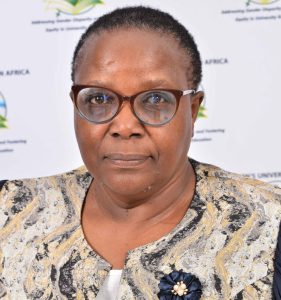
Women’s University in Africa Libraries is a private library with over 25 000 volumes of resources in a variety of formats.
Prior to being named University Librarian in December 2021, Chaitezvi served as Sub Librarian and eventually Deputy Librarian of Women’s University.
Ms Chaitezvi was a member of the Intellectual Property Advisory Council, where she participated in the Zimbabwean Government’s ratification of the Marrakesh Treaty and approval of the National Intellectual Property Policy and Implementation Strategy. She was also the Country Coordinator for intellectual property issues in the Librarianship arena. She was also the Country Coordinator of the Open Access Movement. She is currently a member of the ZIBF Program and Logistics Committee; the Zimbabwe Universities Libraries Consortium (ZULC): Zimbabwe Library Association; and the Confederation of Open Access Repositories (COAR).
Her research interests include Open Educational Resources and the Open Science movement and digitalics.
Previously, Ms Chaitezvi was the Multimedia Librarian for Radio and Broadcasting Services in Botswana. In this role, she designed, implemented, coordinated, and established 5 multimedia libraries; she also trained fellow librarians in preservation and preservation of various media formats.
Ms Chaitezvi completed her dissertation entitled, “Factors affecting adoption of Open Educational Resources by Zimbabwean Universities” at the National University of Science and Technology in fulfilment of her MSc. She earned her Postgraduate Diploma in Library and Information Science from the University of Botswana and also holds a BA in Economic History from the University of Zimbabwe. Before a career in librarianship, Ms Chaitezvi taught History in a public High school.

Mr Murehwa is a registered Public Accountant with the Public Accountants and Auditors Board (PAAB) and is an Associate Member of the Chartered Governance and Accountancy Institute in Zimbabwe (CGAIZ). He also holds a Master of Commerce in Professional Accounting and Corporate Governance from Great Zimbabwe University (GZU), Master’s degree in Business Leadership from Bindura University of Science Education (BUSE) and Bachelor of Commerce in Accounting from the Zimbabwe Open University (ZOU).
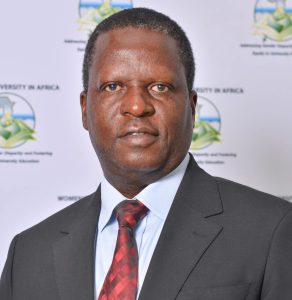
PROFILE SUMMARY
ICT executive and academic leader with 25+ years’ experience in ICT strategy, eLearning systems, software engineering, and embedded systems design. Proven track record in university ICT leadership, policy development, and research commercialization—fellow of the International Institute for Software Technology (UNU).
CORE COMPETENCIES
· ICT Strategy & Governance
· eLearning Systems
· Software & Embedded Systems
· Project Leadership
· Curriculum Development
· Research & Policy
EDUCATION
· PhD (Knowledge Management) – International Institute for Social and Business Studies (Candidate)
· MSc Applied Physics – University of Zimbabwe
· BSc (Hons) Physics – University of Zimbabwe
· Graduate Fellowship – Ball State University, USA
CERTIFICATIONS
· Advanced ICT Management – Galilee Institute
· Project Management with Monitoring and Evaluation- Galilee Institute
· Software Project Management – UNU
· Formal Systems Specification (RAISE) – UNU
PROFESSIONAL EXPERIENCE
· Women’s University in Africa – Information Technologist (2021–Present): Lead ICT strategy and digital transformation.
· Zimbabwe Open University – Director, ICT (2009–2020): Developed ICT strategic plan, implemented WAN, and various systems (e-learning, registry, finance).
· Catholic University in Mozambique– Chair, IT (2008–2009): Managed ICT services and faculty operations.
· SIRDC – Director, Informatics Institute (2005–2008): Led R&D projects and ICT strategy.
SELECT ACHIEVEMENTS
· Implemented enterprise-wide ICT systems and eLearning platforms.
· Developed commercial software applications and national ICT policies.
· Published research in software verification, eLearning, ICT strategy, and knowledge management
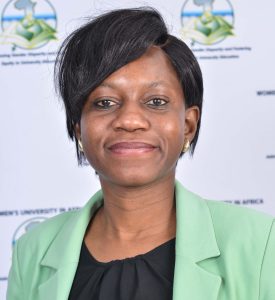
Her key responsibilities are to provide strategic administrative leadership, oversee the University’s human capital and Academic Registry functions, and manage the general governance and secretarial functions of the institution.
Mrs Mutyambizi’s professional career spans over fifteen years, characterised by transformative leadership in both the corporate and academic sectors. Her career commenced at Air Zimbabwe as a Human Resources Officer before joining the Zimbabwe Institute of Management (ZIM) as Training Administrator.
Mrs Mutyambizi subsequently held three distinct senior roles at Africa University, where she served as Deputy Registrar (HR and Administration), Interim Registrar, and Director of the Harare Campus.
In her previous roles, Mrs Mutyambizi has been instrumental in:
· Institutional Transformation: Serving as a key member of the Transformation Taskforce, which drove service delivery and operational efficiencies that saw Africa University’s national ranking rise to Best University in Zimbabwe in 2021.
· Strategic Right-Sizing: Managing comprehensive restructuring and retrenchment exercises to ensure the organisation remained lean, competent, and mission-aligned.
· Crisis Management & Sustainability: She played a pivotal role in navigating a volatile, uncertain, complex, and ambiguous (VUCA) environment by developing long-term strategies that ensured institutional sustainability. This included the seamless transition from face-to-face teaching to online learning, ensuring academic continuity and modernising the delivery of higher education.
· Growth & Enrolment Strategy: Under her leadership, student enrolment increased through the introduction of flexible learning modes, including evening classes and strategic regional outreach at the Zimbabwe Institute of Management.
Mrs Mutyambizi is an accomplished administrator and strategist holding a Master of Science (MSc) in Human Resource Management and a Bachelor of Science (BSc) in Human Resource Management. Her leadership is defined by a commitment to aligning administrative rigour with the evolving technological and global needs of the modern academic landscape.

Her key responsibilities are to provide academic, research and innovation leadership and general administration.
Prof Hungwe’s academic career spans two decades having started off as a Graduate Teaching Assistant at the University of Zimbabwe in 2001. Between September 2002 and November 2016, she worked as Lecturer, Senior lecturer, Associate Professor and Chairperson in the Human Resource Management department at the Midlands State University (MSU). She led MSU’s Faculty of Social Sciences from December 2016 to December 2025.
Professor Hungwe also serves in the following roles;
• she has recently been appointed to the Biomedical Research and Training Institute (BRTI) Board of Directors.
• she is a Peer Reviewer, International qualifications Assessor, Academic Thought Leader and Programme Evaluator for the Zimbabwe Council for Higher Education (ZIMCHE).
• she is an Editorial Board member of the Discover Global Society journal.
• She is an Occasional Editor of the Disability & Society journal.
• she is a member of the Southern Africa Research Capacity Network (SOFAR) Ethics Advisory Board. SOFAR is a European and Developing Countries Clinical Trials Partnerships (EDCTP) research capacity building network. The SOFAR Ethics Advisory Board assesses the ethical appropriateness of research proposals submitted by SOFAR fellows (MSc., PhD., and Post- Doctoral) providing constructive feedback and recommendations.
• she is a member of the Gender Committee for the MasterCard Foundation Project at the Centre on African Philanthropy and Social Investment (CAPSI) at the Wits Business School, University of Witwatersrand, Johannesburg, South Africa. This committee serves as an advisory body to the research programme supporting gender-sensitive methodologies, content, engagement and analysis of the research.
• she is a Research Fellow at the Centre for Gender and Africa Studies, University of the Free State, South Africa.
Prof Hungwe is an accomplished scholar whose research focuses on ageing, disability, gender and migration. She co-supervises PhD students at the University of Botswana and the University of Bristol, England. She also engages in consultancy for regional and international organisations such as the UN Women.
In 2025 she received the Midlands State University Best Female Researcher Award and the Outstanding Woman in Academic & Education award from the Zimbabwe CEO’s network. She holds a PhD in Sociology (UNISA), an MSc in Sociology and Social Anthropology (UZ) and a BSc in Sociology (UZ).
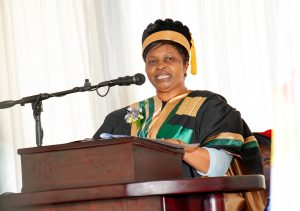
Professor Sunungurai Dominica Chingarande is a Professor of Sociology who holds a PhD in Sociology, a Master of Science in Sociology and Social Anthropology and a BSc Honours in Sociology. She is the Vice Chancellor of the Women’s University in Africa. She joined WUA as its 2nd Vice Chancellor in April 2021. When she joined Women’s University in Africa, she was coming from Zimbabwe Ezekiel Guti University where she was the Vice Chancellor of the institution. Professor Chingarande also served as the Pro-Vice Chancellor for Zimbabwe Ezekiel Guti University and a lecturer and head of the Sociology Department at the University of Zimbabwe. She is a member of the International Association of Universities board, representing Africa, a board member of the Centre for Zimbabwean Studies at Rhodes University, a board member for the Forum for African Women Educationalists Regional Secretariat, a board member of the Association of African Universities representing Southern Africa, a member of the Zimbabwe Council for Higher Education (ZIMCHE) board, a gender equality expert for the African Group of Negotiators, a think tank of experts and practitioners that provides evidence based technical support to African governments for effective engagement in international and national climate change policy formulation. She is a focal person for Zimbabwe for the Resilient Africa Network (RAN), a USAID funded project working with over 100 Universities in East, West and Southern Africa. She was a focal person for Zimbabwe for the USAID Funded Long-term Assistance and Services for Research (Laser) Partner University Led Solutions Engine (PULSE) (2019-2024) working with Purdue University, Makerere University and Catholic Relief Services. She has won several awards for her outstanding performance as an educationalist and administrator.
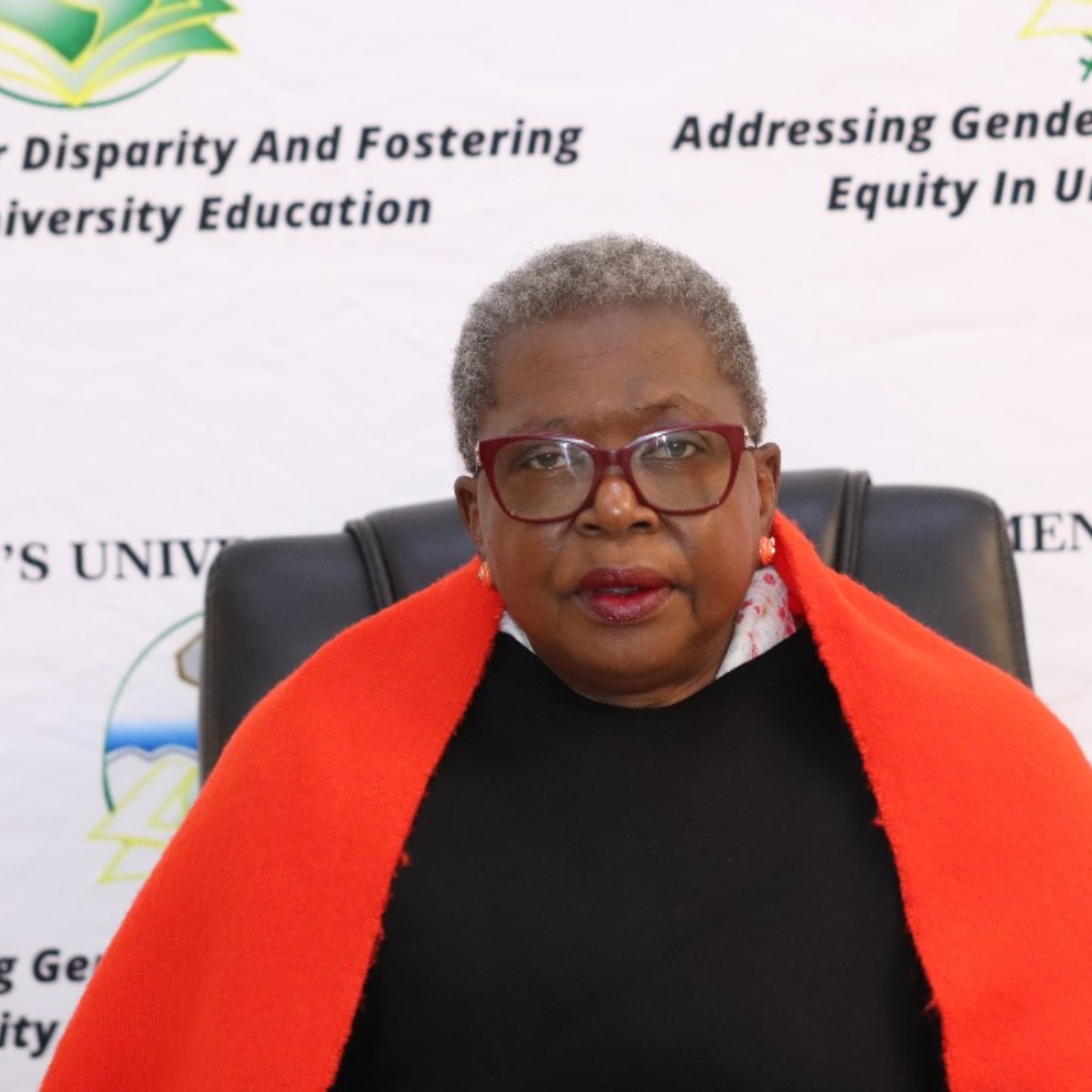
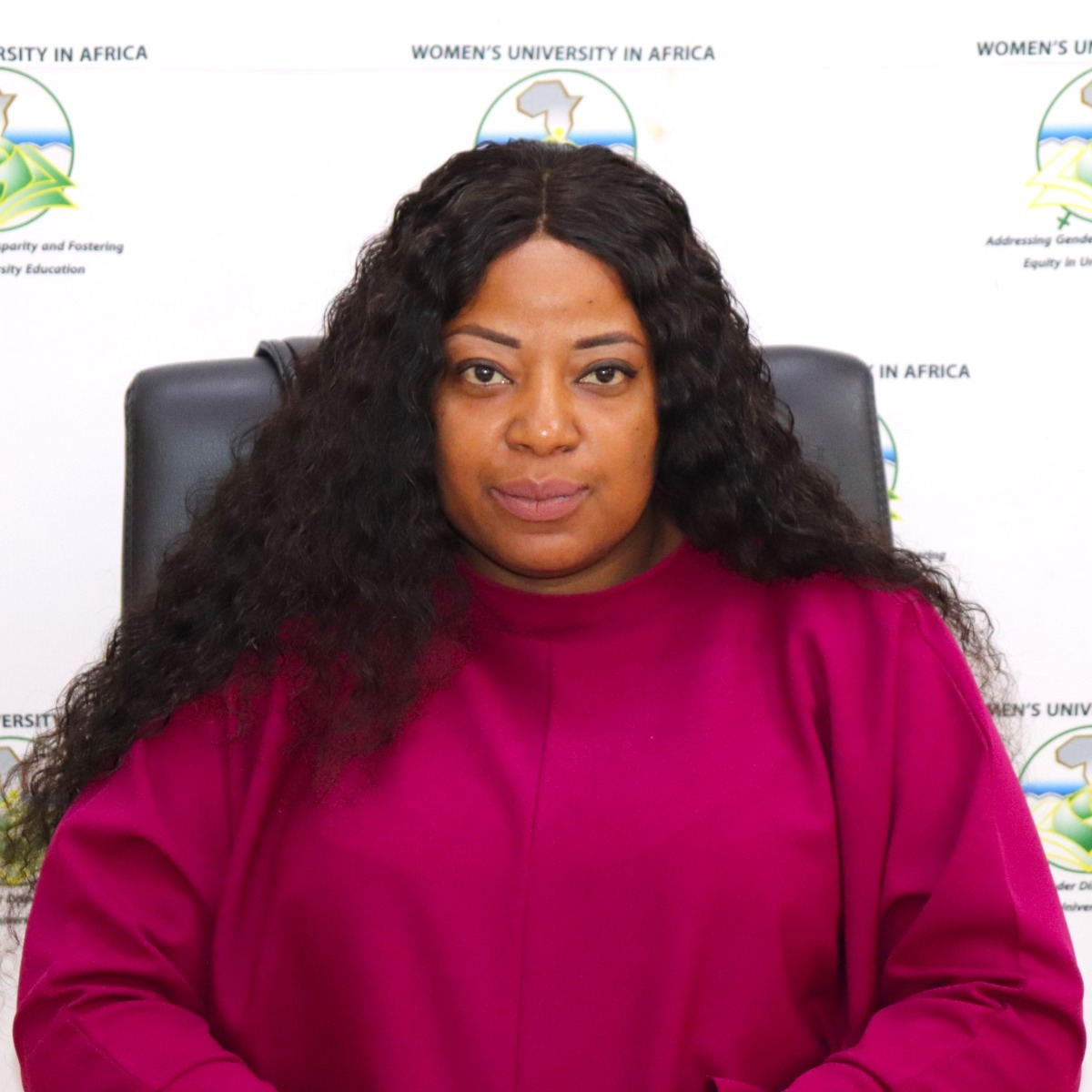




Jeanette Marie Manjengwa is an Associate Professor who completed her PhD at the Institute for Development Policy and Management (IDPM), University of Manchester, UK; a Masters Degree in Environmental Policy and Planning from the University of Zimbabwe; and a B.Sc. (Hons) in Environmental Science from the New University of Ulster, UK.
She lectured in the Centre for Applied Social Sciences, University of Zimbabwe, was Deputy Director, Institute of Environmental Studies, and Deputy Dean of the Faculty of
Social Studies, University of Zimbabwe. She was also a Commissioner on the Zimbabwe Land Commission.
Professor Manjengwa has undertaken research and published on a wide range of diverse topics, including sustainable and pro-poor development; poverty, in particular aspects of
child poverty; environmental governance and management; climate change; and environmental and equity aspects of land reform. She has implemented country-wide poverty and wellbeing surveys; and local-level scenario planning processes. She was the coordinator for the Moving Zimbabwe Forward: An Evidence-based Policy Dialogue Initiative. She has
worked with UNICEF Zimbabwe on several initiatives, including a national assessment of out-of-school children; a specialised study on urban poverty; and children and climate
change.
Professor Manjengwa was Guest Editor of the Development Southern Africa (2016) Special Issue: ‘Towards Resilient Urban Communities’.


Chief Business Development Officer at Liquid Intelligent Technologies, responsible for the payments processing business across the rest of Africa. He has over 35 years of experience in the technology, agriculture, and financial services sectors, having worked in various roles since 1990.
Before his current position, he worked for Transaction Payment Solutions (TPS) in various roles, including Projects Manager, Technical Director, and Managing Director.
Prior to joining TPS in 1998, Mr Sherewa worked for one of Zimbabwe’s tobacco auction floors as Information Technology (IT) Manager, where he was charged with computerising the operations of the auction floors.
Before that, he worked for a leading financial institution in Zimbabwe for seven years, where he served as a Programmer, Database Administrator, and Systems Development Team Leader.
He holds a Bachelor of Science Degree in Computer Science and Mathematics (1987 – 1989), and a Master of Business Administration Degree (1994 – 1996), both obtained from the University of Zimbabwe.

Dr. Winifred Goromonzi, DBA
38 years of experience as a banker, development economist, project manager, and social impact manager, I have successfully implemented multi-million-dollar projects, set up innovative departments, and represented the country at international fora and negotiations. I have worked in both government and the private sector to manage national projects, source funding, conduct internationally funded research, and publish papers and reports, some of which have influenced policy decisions. I believe in results-based approaches, which have allowed me to help businesses thrive and increase organisational revenues.
Member of the Tripartite Negotiating Forum (TNF) Management Committee – Organised Business. Served for 9 years as Council Member for Women’s University in Africa (Chairperson of the Human Resources Committee.
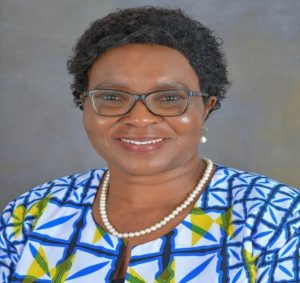
Sherree Shereni is a seasoned and accomplished leader in business and society, with a professional career in both the private and public sectors in Zimbabwe, across the continent of Africa and in parts of the Eurasia region. Her professional career and experience range from central banking and financial services to fast-moving consumer goods, manufacturing, retail, mobile network services, digital and financial technology services, the energy industry, and the international NGO and community development sector in Africa.
She is the founder of, among other entities, Eminence Business Academy and has sat on various boards, including, in her home country, the Board of Econet Wireless Zimbabwe Limited and the board of Ecocash Holdings Zimbabwe Limited, which she chaired. She is also a global mentor of the Atlantic Council, an organisation that engages leaders worldwide as solution-agents to national and global challenges.
This includes the Reserve Bank of Zimbabwe, the SADC Central Banking region, The Coca-Cola Company, The Coca-Cola Africa Foundation, Coca-Cola Beverages Africa, as franchisee of Total Energies Marketing Zimbabwe and as founder of Eminence Business Academy and Mikana Incorporated.
Sherree has also sat on and chaired boards and board committees, among them, the Board of Econet Wireless Zimbabwe Limited and Ecocash Holdings Zimbabwe Limited Group (formerly Cassava Smartech Zimbabwe Limited), which she chaired; Ecocash Private Limited; a member of the national advisory board of Bantwana Zimbabwe and of Women in Franchising Africa, and a global mentor of the New York-based Atlantic Council, an organisation that engages leaders worldwide as solution-agents to national and global challenges.
During her 14-year tenure with the Coca-Cola System, Sherree was recognised multiple times for her accomplishments in brokering win-win outcomes for the private sector and governments across Africa; contribution to the company’s financial performance, reputation and values; leading & inspiring other women as Chairperson of the Women’s Leadership Council of Central, East and West Africa and for innovatively contributing to numerous community interventions in 30 African countries, working with 20 international NGOs and local community partners as Program Director of The Coca-Cola Africa Foundation..
Sherree holds a B.Sc. Honours (Economics) Degree from the University of Zimbabwe, an MBA in Leadership and Sustainability from the Robert Kennedy College in Switzerland (with the UK-based University of Cumbria), and a Diploma in Banking and Finance from Manchester University (United Kingdom), as well as several professional qualifications.
Contact Details
M: +263-771-222-946
W: +27-663-693-864
sshereni@icloud.com
sshereni@gmail.com
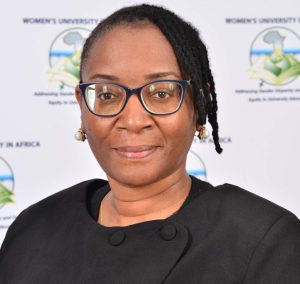
email:lizchikerema@gmail.com
Experience
• Lizzie is a Director Internal Audit at ZBC
• She has over 20 years of auditing
experience from having worked as
an internal auditor as well as an
external auditor
• Auditor
or lizzie.chikerema@zbc.co.zw
Zimbabwe National Army- 1998-2004
• Senior Auditor to Acting Deputy Director Of Audit, Auditor General’s Office
2004-2007
• Internal Audit Manager
Skills
• Knowledge of business processes,
systems, governance, and control
domains.
• Examples of activities :
SIRDC 2007 – 2021
• Obtaining an in-depth knowledge and understanding of clients’
operations.
• Delivery experience in risk-based
internal audit, enterprise risk
management and governance.
• Financial and operational audits,
audit programmes, plans and
internal audit charter
Other Skills
• Consultant on business
proposals/plans
• Pen fattening, cattle breeding,
poultry, market gardening, retail and
others.
• Interpreting policies and ensuring compliance with governing statutes.
• Developing risk-based audit plans
• Ensuring financial statements are prepared in accordance with IFRS
• Adding value by way of recommendations
• Presenting audit reports to the Board Audit Committee meetings.
Board Sittings
• Radiation Protection Authority of Zimbabwe (RPAZ)
• Trustee – Diocese of Harare Anglican Church (CPCA)
• Traditional Medicines Practitioners Council (TMPC)
• Women’s University In Africa (WUA)

Engineer Fred Gweme is a professional Electronics and Computer Engineer. He has extensive experience in the design and development of new and innovative Information and Communication Technology products and systems. He holds a BSc (Eng) Hons degree and an MPhil degree in Computer Engineering from the University of Zimbabwe. He also acquired an Executive MBA degree from the East and Southern African Management Institute.
In 1997, Eng Gweme joined the Scientific and Industrial Research and Development Centre (SIRDC) where he has worked in various capacities, first as a Research Scientist in the Informatics and Electronics Institute. When the institute was split into two, the Informatics Institute and the Electronics and Communications Institute, he was subsequently elevated to become the inaugural Director of the newly formed Electronics and Communications Institute. He led a team of Electronic and Communication engineers and technicians that successfully designed, manufactured and commercialised a wide range of science laboratory and teaching equipment. In 2007, he joined SIRTECH, the commercial wing of SIRDC, as the General Manager of the Electronics production unit.
He was later appointed the Director of the Informatics Institute in January 2010 to lead a team of ICT specialists in the design and development of various software products. In February 2024, he was appointed the Director of ICT, a post he has held to date.
Eng Gweme is a registered Professional Engineer with the Engineering Council of Zimbabwe, a Fellow and former Board member of the Zimbabwe Institute of Engineers, a Council member of the Women’s University in Africa and an advisory board member of the Emerald Hill School of the Deaf. He is also a member of the National e-Waste Management Task Team which has been mandated to spearhead the formulation of a National e-Waste Handling and Management Policy for Zimbabwe. Eng Gweme has published a number of papers and has written and presented papers at various forums.
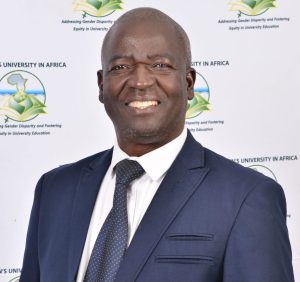
Mr Israel Kuveya is a seasoned Architectural Technologist and visionary leader with over three decades of experience in architecture, project management, entrepreneurship, and ministry leadership. He is the founding principal of IK Design Consultants, a Zimbabwean-based design practice that has spearheaded significant projects such as the ZEGU University in Bindura, various commercial and residential buildings, and several church facilities across the country.
Mr. Kuveya holds a National Higher Certificate in Architectural Technology from Harare Polytechnic and has been actively involved in shaping Zimbabwe’s built environment since 1986. His early career included work with the Ministry of Public Works, Vengesayi Architects, and Pearce Partnership Architects, contributing to high-profile projects like the Eastgate Building, Chinhoyi Provincial Hospital, and Hurudza House.
He brings a unique blend of technical expertise, creative vision, and a deep commitment to institutional development. Known for his strategic thinking, leadership, and collaborative spirit, Mr.Kuveya has served on various boards and committees, including as a Council Member for Great Zimbabwe University, Chairman of the ZEGU Technical Building Committee, and Finance Chairperson for ZAOGA Harare Province Central.
In addition to his architectural career, Israel is a passionate lifelong learner and community builder. He co-founded a school with his wife called Rehoboth Spring Group of Schools that is in Mazowe. He holds a Doctorate in Theology from Triune University (USA) and has served in numerous faith-based leadership roles. His entrepreneurial mindset is bolstered by training from EMPRETEC Zimbabwe, the International Labour Organisation, a certificate in law from ZEGU University and other personal development programs. He is recognized for his ability to manage complex projects, balance aesthetics with functionality, and communicate effectively with a wide range of stakeholders.
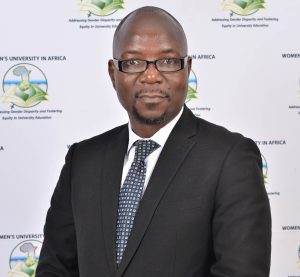
Dr. Ignatious Nzero is the substantive Dean of the Faculty of Law at ZOU. He holds the following qualifications; Doctor of Laws (Mercantile Law) (University of Pretoria), Master of Laws (Business Law (University of KwaZulu-Natal), Bachelor of Laws 9University of Fort Hare), Post Graduate Diploma in Higher Education (Chinhoyi University of Technology). His area of specialisation is Competition Law, Insolvency Law and Corporate Law. His research interests include competition law and policy, regulation of economic activities and general corporate law and practice. Dr Nzero is a seasoned academic with experience in legal curriculum development. Over the years, he had taught law modules and supervised students’ research projects at both undergraduate and post graduate levels. He is admitted to practice law in Zimbabwe as a registered legal practitioner, a member of the Law Society of Zimbabwe and the Academic Society of Competition Lawyers (international). He is also a member of the editorial committee for the Zimbabwe Law Report, the Editorial Board for the Africa University Law Review. Dr Nzero is currently the vice chairperson of the Women’s University in Africa.