What are you looking for?
More information about Google data transfer in WUA's Privacy Policy.
More information about Google data transfer in WUA's Privacy Policy.
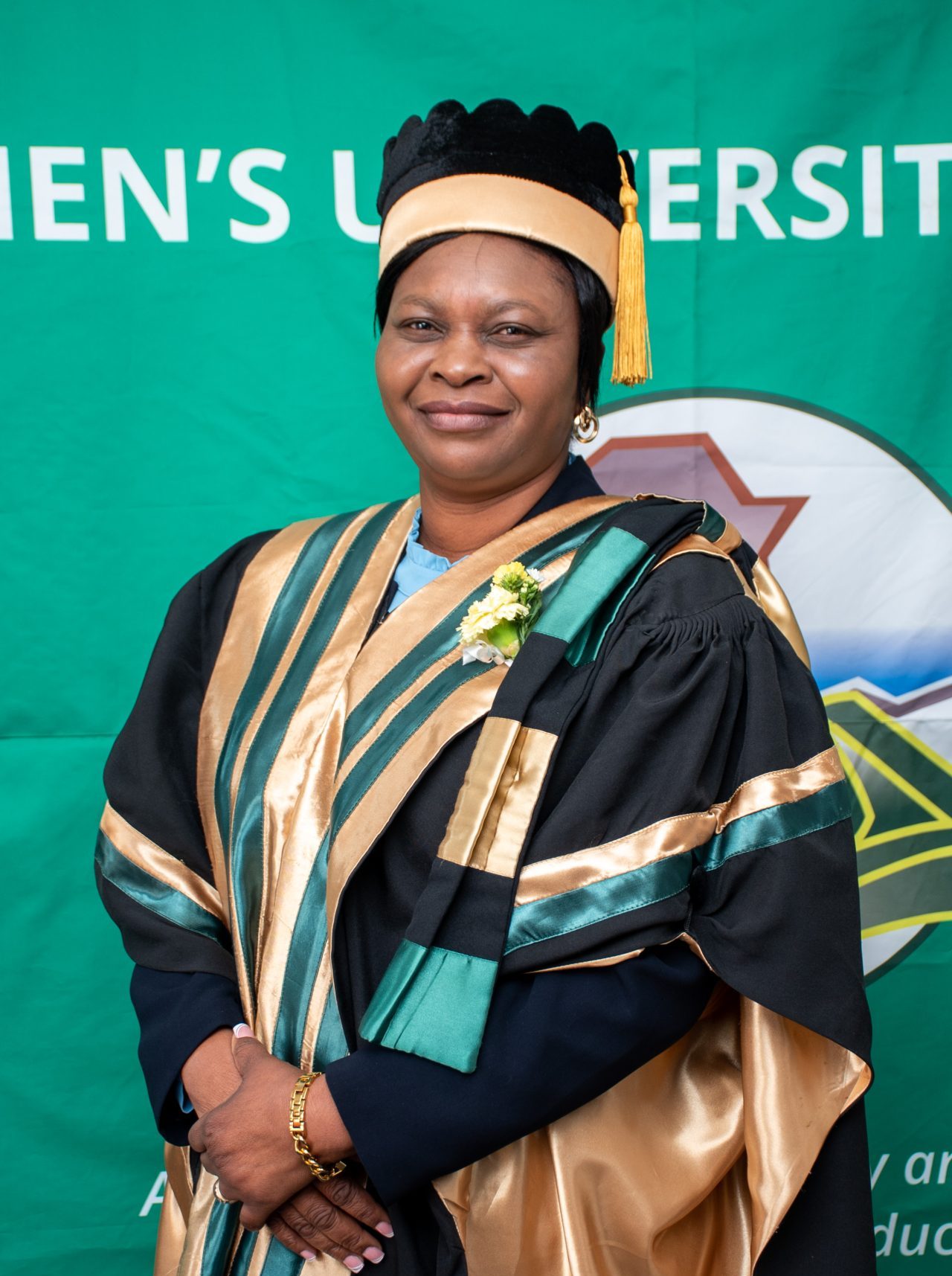
It is with excitement and great anticipation that I take the button stick of driving the mammoth task of championing the gender agenda in Africa at and through Women’s University in Africa from the co-founder and founding Vice Chancellor Professor Hope Cynthia Sadza. My passion has always been to see a transformation of social and gender norms promoting gender inequality through first of all a transformation of the institutions that act as gatekeepers to these norms, for which education plays a pivotal role. Africa’s gender parity stands at 0.58 (1 would be full parity) and it can take 140 years for the continent to achieve full parity without drastic action (McKinsey’s Power of Parity: Advancing Women’s Equality in Africa Report). Closing the gender gap in all spheres of life is urgent globally and especially in Africa where women and girls face the risk of being left behind-millions are not in school, and 4 million may never set their foot in a classroom. Africa is at the forefront in the discourse and fight against gender inequality and gender transformative disruption through fostering an enabling environment for gender equality and gender lens investing, ensuring girls’ and women’s participation and voice and breaking the ‘cement ceiling’ for women’s leadership among others. The strides in promoting gender equality across various sectors are there for all to see yet the gender gap still persists. It is in this light, that Women’s University in Africa exists to foster gender equality in and through university education.
Through its Gender Centre, the University will play a very important role of supporting the continent with high quality rigorous research to facilitate use of evidence in programme and policy decisions. Our Gender Centre among other things, aims at promoting evidence based programming by governments, development partners, the private sector and other players in addressing the underlying causes of gender inequality in Africa. It will do this by delivering a new body of evidence and developing a compelling narrative geared towards various stakeholders on what works and what does not in promoting gender equality. This evidence will deepen capacity for informed policy making and innovations in Africa.